Key Takeaways
- Caregiver support groups give you a regular, structured space to talk with people who understand caregiving without having to explain the basics first.
- Groups exist in-person, online, and by phone, and most are free through hospitals, Area Agencies on Aging, or national organizations.
- Caregiver burden is consistently linked to depressive symptoms, which is one reason connection and support matter as much as logistics.
- A support group is not a substitute for therapy when symptoms of anxiety or depression are present, but the two work well together.
- The right group is one you’ll actually attend again; condition-specific and format fit matter more than finding a “perfect” group.
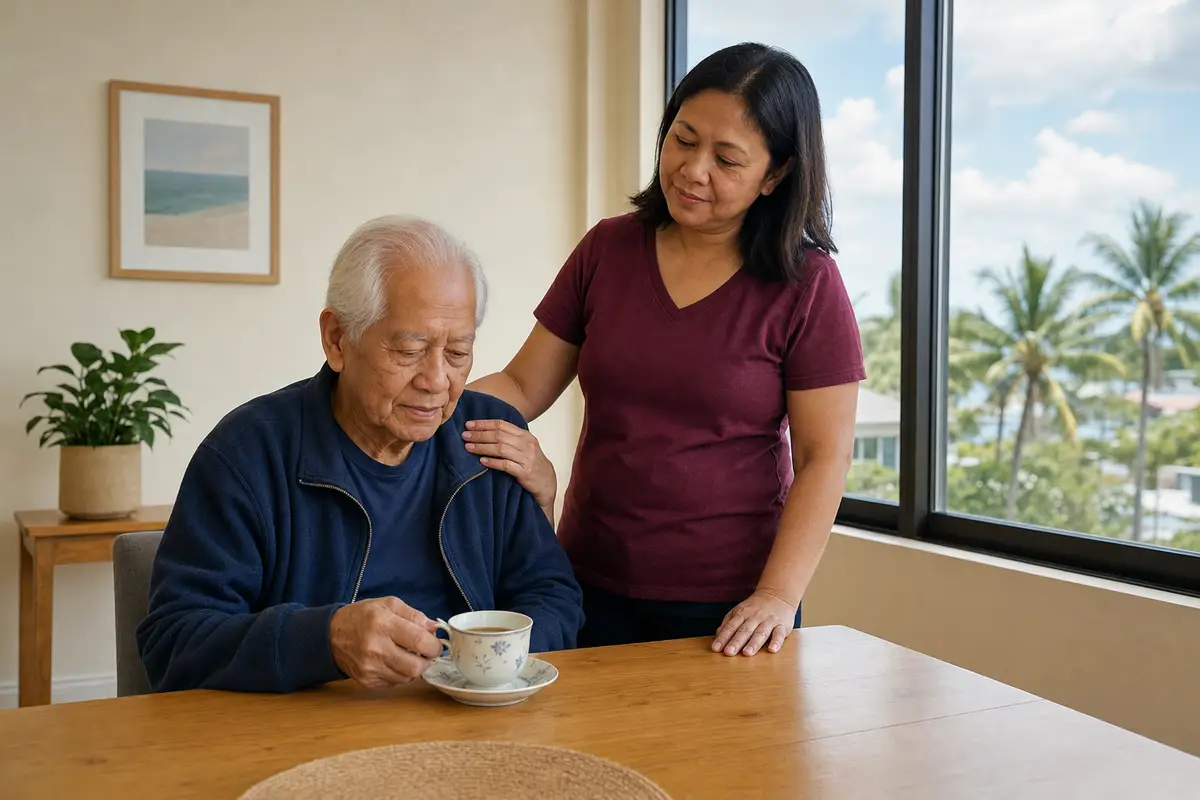
When you’re the one managing medications, doctor’s appointments, and the slow worry that comes with watching someone decline, it’s easy to stop mentioning how you’re doing. Friends ask how your mom or husband is doing, not how you are. Caregiver support groups exist because that gap is common, not because something is wrong with you for feeling it. They give you a room, physical or virtual, where the first question is about you.
What are caregiver support groups, exactly?
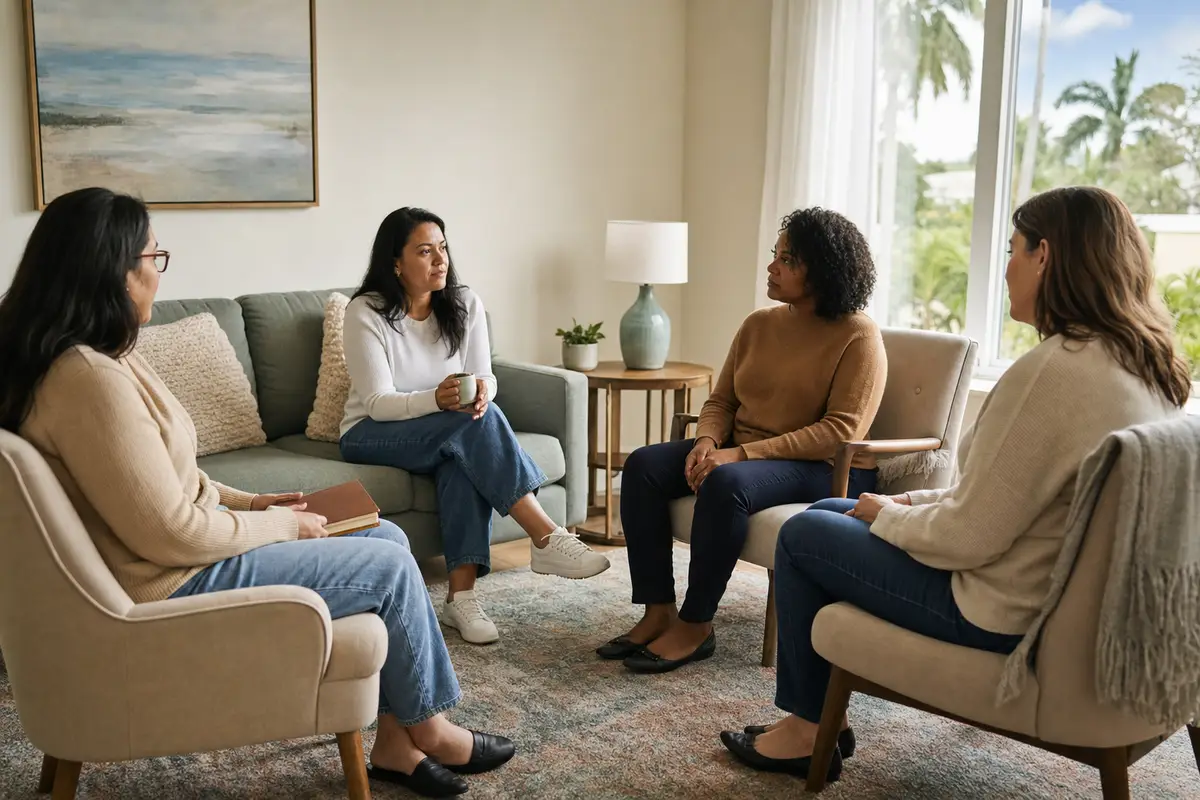
Caregiver support groups are regular meetings of people who are caring for a family member or friend, where the shared focus is the caregiver’s experience rather than the care recipient’s diagnosis. Some are led by a social worker or counselor; others are peer-led, meaning a fellow caregiver facilitates the discussion. Groups meet weekly, biweekly, or monthly, in person or by video, and sessions run 60 to 90 minutes.
The format varies but the core purpose doesn’t change: a space to talk openly about exhaustion, guilt, grief, and the practical problems caregiving creates, with people who don’t need the situation explained to them first. You don’t have to summarize years of history before someone understands why you’re tired. That shorthand is what makes these groups different from talking to friends or coworkers, who need the backstory before they can respond to the present moment.
Many groups share practical information alongside emotional support: how to talk to a doctor about hospice timing, how to apply for respite care, how other families have handled a parent refusing help. That mix of logistics and honesty is intentional. Caregiving is both an emotional experience and a long list of unanswered administrative questions, and a well-run group makes room for both in the same session rather than forcing you to choose which need to bring that week.
Members typically introduce themselves briefly at the start, name who they’re caring for and what the week has looked like, then the group moves into open discussion or a planned topic. Some groups rotate a short educational segment, a nurse or social worker explaining a specific resource, before opening the floor. Others stay purely peer-driven from start to finish. Ask the organizer which format a group uses before your first visit, so you know what to expect when you walk in.
Condition-specific vs. general groups
Some groups are built around a specific diagnosis: dementia, Parkinson’s, cancer, stroke recovery. Others are open to any caregiver regardless of what their family member is facing. Condition-specific groups go deeper on practical strategies particular to that illness, like how to respond to dementia-related agitation or how to manage a loved one’s chemotherapy schedule. General groups focus on the caregiving role itself: the identity shift, the isolation, the decision fatigue that comes with constant responsibility for another adult’s life.
Neither is universally better. A caregiver managing a parent’s dementia and a caregiver managing a spouse’s cancer treatment face different daily realities, even though both carry heavy emotional weight. Choose a condition-specific group first when the diagnosis itself creates distinct daily challenges, such as memory loss or unpredictable behavior changes, because the strategies other members share will apply directly to your week. Choose a general group when what you need most is connection with other caregivers, regardless of diagnosis, because the common ground there is the role itself, not the illness behind it.
Many caregivers attend both types over time. A dementia-specific group handles the practical questions unique to that disease, while a general group provides a wider circle of people who understand caregiving fatigue regardless of what caused it. There’s no rule limiting you to one group, and most organizations welcome caregivers who split their time between a condition-specific meeting and a general one.
How caregiver support groups actually help
Support groups work by reducing isolation, not by fixing the underlying caregiving situation. Your parent’s condition doesn’t change because you attended a meeting. What changes is whether you’re carrying the weight of it completely alone, and whether you have somewhere regular to process what’s happening before it builds into something harder to manage.
Caregiving carries real clinical risk, and that risk is why structured support matters. A two-year study following spousal caregivers of people with dementia found that roughly one-third developed comorbid anxiety and depressive disorders, and 60% developed at least one of the two (Joling et al., Am J Geriatr Psychiatry, 2015). That is not a reflection of personal weakness. It is what sustained, high-demand caregiving does to people without adequate support, and it is why clinicians treat caregiver isolation as a measurable risk factor, not an inconvenience to tolerate.
Clinical Insight
The link between feeling burdened and becoming depressed is not anecdotal: a systematic review and meta-analysis of family carers of older relatives found subjective caregiver burden consistently associated with depressive symptoms (PLOS One, 2019). A 24-month study of spousal dementia caregivers found about one-third developed comorbid anxiety and depressive disorders, with 60% developing at least one of the two (Joling et al., Am J Geriatr Psychiatry, 2015).
This is why recognizing what is a common sign of caregiver burnout matters as much as finding a group. Burden and isolation feed each other. A support group interrupts that cycle by putting you in regular contact with people who recognize what you’re describing without you having to justify it. That regular contact is a form of protection, not just comfort, and the research above shows why that protection has measurable stakes.
What to expect at your first meeting
Most groups open with a check-in, where each person shares how their week has gone. You are never required to speak in detail, and you’re not required to have a crisis to justify showing up. Caregivers attend their first meeting exhausted, with nothing dramatic to report, and that is a valid reason to be there. People listen for several sessions before they say much at all, and facilitators treat that as normal participation, not a problem to fix.
Facilitators keep the group from turning into unsolicited medical advice or one person dominating the time. Confidentiality is standard practice: what’s said in the group stays there, and groups state this explicitly at the start of every meeting. If a group feels combative, overly negative, or dominated by one voice, try a different one. Fit matters more than loyalty to the first group you find, and most organizations run several groups at different times and formats specifically so people can find one that works for them.
Bring a notebook if you want one, but nothing is required of you beyond showing up. First-time attendees frequently say the hardest part was walking through the door; once seated, the structure of the check-in does the work of easing you into the conversation. If virtual, test your camera and microphone beforehand so the first few minutes aren’t spent troubleshooting instead of connecting.
Where to find caregiver support groups
- Source — Hospital or health system social work department, Format — In-person or hybrid, Typical cost — Free
- Source — Area Agency on Aging (local office), Format — In-person, phone, online, Typical cost — Free
- Source — Alzheimer’s Association, Format — In-person and online, dementia-specific, Typical cost — Free
- Source — Family Caregiver Alliance, Format — Online, phone support line, Typical cost — Free
- Source — Disease-specific nonprofits (cancer, Parkinson’s, stroke), Format — In-person and online, Typical cost — Free
- Source — Private practice / therapist-led groups, Format — In-person or telehealth, Typical cost — Varies, insurance-covered in many cases
A phone call to a local hospital’s social work line or an Area Agency on Aging is the fastest way to get a current list, since meeting schedules change frequently. National organizations maintain searchable directories by zip code and condition, and most will send you a schedule the same day you call. If the first group you find meets at a time you can’t manage, ask the same organization about other groups in the area; most run several, not just one.
When you call, ask three direct questions: is the group peer-led or clinician-led, is it condition-specific or general, and is it in-person or virtual. Those three answers narrow the field quickly and help you avoid showing up to a format that doesn’t match what you need right now. Write down the facilitator’s name and direct line so you can follow up if the first meeting time doesn’t work with your schedule.
Support groups versus individual therapy
A support group gives you peer connection and practical tips from people living a version of your situation. It does not replace individual care when caregiving has produced symptoms that interfere with daily functioning, like persistent low mood, panic, or an inability to sleep or eat normally.
If you’re noticing those symptoms, therapy for caregivers addresses what a group is not designed to treat: a licensed clinician assesses for depression or anxiety directly and works with you on it, one-on-one, over time. Caregivers use both: a group for ongoing connection, individual therapy for the clinical piece. Neither cancels the need for the other, and group facilitators will tell you directly when what you’re describing sounds like something a therapist should evaluate.
If you’re trying to figure out which stage of exhaustion you’re in before deciding what kind of support to pursue, review the stages of caregiver burnout and compare that against how you’ve felt over the past several weeks, not just today. The distinction matters because a support group alone will not resolve clinical depression, and a therapist alone will not replace the peer connection a group provides.
When caregiving affects your own health
Caregiver stress doesn’t stay emotional. It shows up physically, in sleep problems, headaches, high blood pressure, and a weakened immune response to everyday illness. If you’ve dismissed your own fatigue, headaches, or sleep problems as just part of the job, read about how to recover from caregiver burnout and take the physical toll as seriously as the emotional one.
Caregiver stress has a clinical name of its own; see caregiver stress is also known as for how professionals classify and discuss it, language that is useful to bring into a support group or a conversation with your doctor. Naming what you’re experiencing in clinical terms makes it easier to ask your doctor for a referral or a screening, instead of describing it only as being tired.
If you’re caring for someone with dementia or sudden changes
Dementia caregiving carries its own specific weight, and sudden behavioral or cognitive changes in an older adult have, in documented cases, a treatable medical cause rather than a progression of dementia itself. If you’ve noticed abrupt confusion or personality shifts, rule out common causes, including infection; see mental symptoms of UTI in the elderly and what causes sudden extreme fatigue in elderly for what to watch for before assuming the change is permanent.
For broader day-to-day guidance on managing the caregiving role itself, caring for an elderly parent and how to deal with caregiver burnout cover ground that complements what a support group offers.
If you’re the one trying to help a caregiver
If you’re reading this because someone you love is the caregiver, not the patient, your role matters too. How to support a caregiver covers concrete ways to help that go beyond saying “let me know if you need anything,” an offer caregivers rarely take you up on because it puts the work of asking back on them. Offering a specific task, like sitting with their parent for two hours on a set day, removes the burden of having to ask.
A direct offer tied to a specific day and time gets accepted far more than an open-ended one. Caregivers are managing enough decisions already; a concrete offer removes one more decision from their list instead of adding to it.
How long before a support group or recovery actually helps
Caregivers want to know how long it takes before they start feeling more like themselves. The answer depends on how depleted you are when you start and whether you’re also addressing sleep, physical health, and any clinical symptoms alongside group support. How long does it take to recover from caregiver burnout walks through a realistic timeline rather than a promise of quick relief.
Getting started
Browse the caregiver resource hub for more on burnout, burden, and recovery, and start with one phone call: your local Area Agency on Aging or hospital social work department will point you to a caregiver support group meeting this week.
Better You Therapy is a Florida-licensed mental health practice providing teletherapy statewide and on-site clinical services in Southeast Florida senior-living communities. If caregiving has brought on persistent anxiety, depression, or exhaustion that a support group alone hasn’t resolved, a licensed clinician will work with you directly, by video from wherever you are, with no waitlist or referral required to get started.