Key Takeaways
- Depression in older adults frequently shows up as fatigue, physical complaints, or withdrawal rather than visible sadness.
- It is not a normal part of aging; it is a treatable medical condition, even when it co-occurs with chronic illness.
- Risk rises with isolation, chronic pain, loss of independence, grief, and certain medications, but risk is not destiny.
- Talk therapy, particularly cognitive behavioral therapy, has strong evidence behind it for older adults, alongside medication management for some patients.
- Access barriers like transportation and mobility are solvable; on-site and video-based care remove them entirely.
When your mother stops returning calls, skips her usual coffee with neighbors, and tells you she’s ‘just tired,’ it’s easy to chalk it up to age. Many families do. But fatigue that lingers for weeks, a sudden lack of interest in things she used to enjoy, or vague aches with no clear cause can point to something more specific: depression in older adults. It’s one of the most under-recognized conditions in later life. It rarely announces itself the way people expect.
What does depression in older adults actually look like?
Depression in older adults presents as physical symptoms more often than emotional ones. Instead of saying ‘I feel sad,’ an older adult mentions trouble sleeping, low appetite, unexplained aches, or constant fatigue. Memory complaints and slowed thinking show up too, sometimes mistaken for early dementia. These overlapping symptoms are exactly why depression in older adults gets missed in routine checkups.
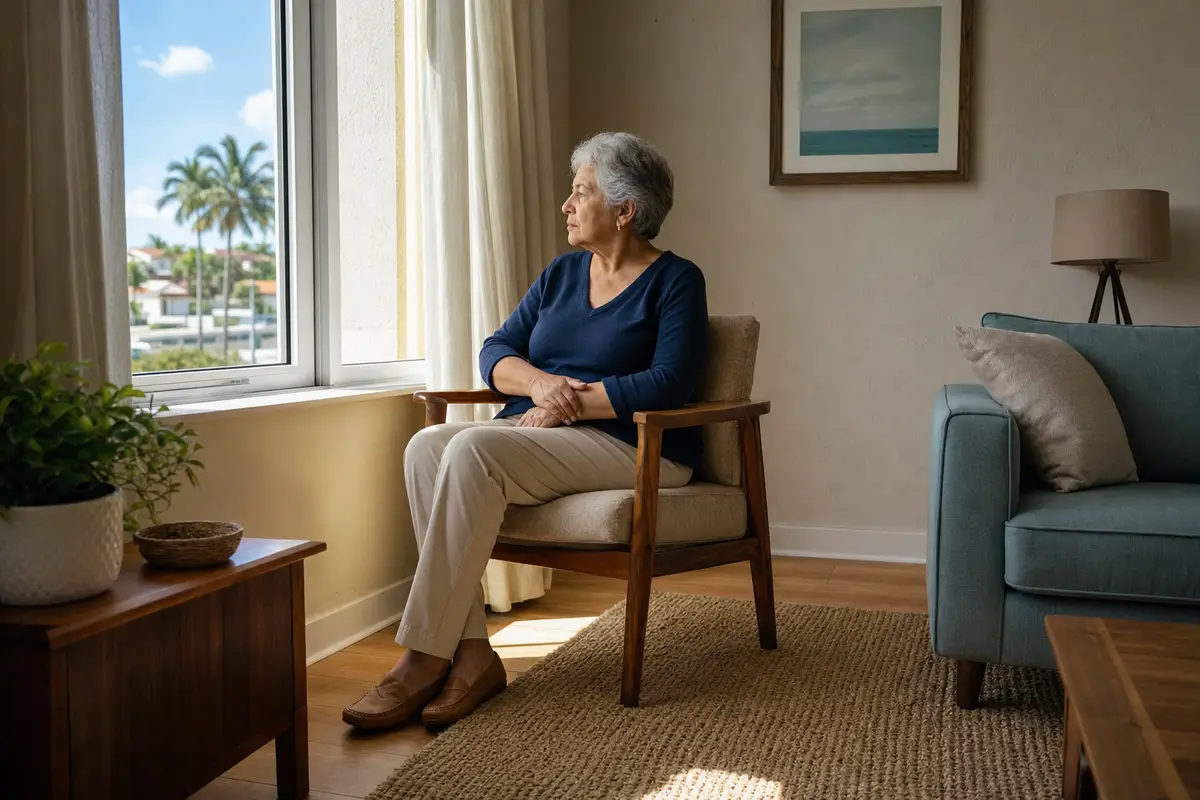
Withdrawal is another common pattern. A person who used to call family every week goes quiet. Someone who played cards with neighbors twice a week stops showing up. These shifts are easy to miss when everyone assumes it’s just ‘slowing down,’ especially when the person still manages basic daily tasks on the surface.
Irritability and uncharacteristic complaining are also signs, especially in men, who are statistically less likely to describe themselves as sad or hopeless. Loss of interest in food, grooming, or hobbies that once mattered matters most when it lasts more than two weeks. A single bad week rarely signals depression; a pattern that holds steady for a month does.
The physical and behavioral signs above cluster together in most cases. A clinician looking for sadness alone will miss the pattern; a family member watching for all three, physical complaints, withdrawal, and loss of interest, catches it faster.
Why is depression harder to spot in later life?
Several factors overlap and mask each other. Chronic illness, medication side effects, grief, and normal aging all produce symptoms that look similar to depression: low energy, disrupted sleep, reduced appetite. A clinician or family member can reasonably mistake one for another without a closer look, and the overlap compounds when a person manages more than one chronic condition at once.
There’s also a generational pattern. Many older adults grew up in a culture where mental health wasn’t discussed openly, and some associate seeking help with weakness or stigma. They describe their mood as ‘fine’ even when daily functioning has clearly changed. This is one reason knowing when to seek treatment for depression matters as much for families as for the person experiencing symptoms.
Finally, depression in older adults is sometimes dismissed by the person’s own doctor as an understandable reaction to aging, illness, or loss, rather than flagged as a treatable condition in its own right. That dismissal delays care that would otherwise help. A primary care visit focused on physical symptoms alone misses the underlying mood condition unless someone asks directly about it.
The pattern repeats across settings: family members defer to doctors, doctors defer to the patient’s own account, and the patient minimizes what they’re feeling. Breaking that cycle usually takes one person, often an adult child, naming the change directly instead of waiting for someone else to raise it.
What causes depression in older adults?
No single cause explains it. Instead, several risk factors combine:
- Risk factor, Chronic illness, Why it matters, Conditions like heart disease, diabetes, and Parkinson’s disease are linked to higher rates of depression
- Risk factor, Chronic pain, Why it matters, Persistent pain disrupts sleep, mobility, and mood regulation
- Risk factor, Loss of independence, Why it matters, Giving up driving, moving to a care setting, or needing help with daily tasks causes grief and loss of identity
- Risk factor, Social isolation, Why it matters, Reduced mobility and the death of friends or a spouse shrink social contact over time
- Risk factor, Grief and bereavement, Why it matters, Losing a spouse, sibling, or close friend is one of the strongest predictors of late-life depression
- Risk factor, Medication effects, Why it matters, Some medications for blood pressure, heart conditions, or sleep carry mood-related side effects
Isolation deserves particular attention. Consider a widower who lived with his wife for fifty years; after her death, his social world narrows to occasional visits from a daughter two states away. The quiet itself becomes a risk factor, separate from the grief. Recognizing signs of loneliness in elderly family members is often the first step toward catching depression before it deepens. The risk factors in the table above rarely appear alone; most older adults living with depression manage two or three at the same time.
The combination matters more than any single factor. A person with chronic pain and a strong social network manages differently than a person with the same pain who also lost a spouse last year and no longer drives. Assessing risk means looking at the whole picture, not checking one box.
Is depression in older adults different from depression at other ages?
The core condition is the same, but the presentation and context differ. Older adults report physical complaints more often than emotional ones, live with co-occurring chronic illness more often, and take medications that affect mood more often. They also face practical barriers, transportation, mobility, hearing loss, that make traditional outpatient therapy harder to reach. None of these differences change the diagnosis; they change how it shows up and how hard it is to catch.
There’s also a quieter version of the condition worth naming. Some older adults function well enough day to day, holding conversations, managing their household, showing up to appointments, while privately struggling with persistent low mood. This pattern overlaps with what’s sometimes called high-functioning depression, and family and clinicians miss it because nothing looks obviously wrong on the surface. A person passes every casual check-in and still lives with depression underneath it.
This distinction matters for diagnosis timing, too. A person who still cooks, dresses, and attends church each week does not fit the stereotype of depression, so symptoms persist for months or years before anyone names them correctly.
What treatment works for depression in older adults?
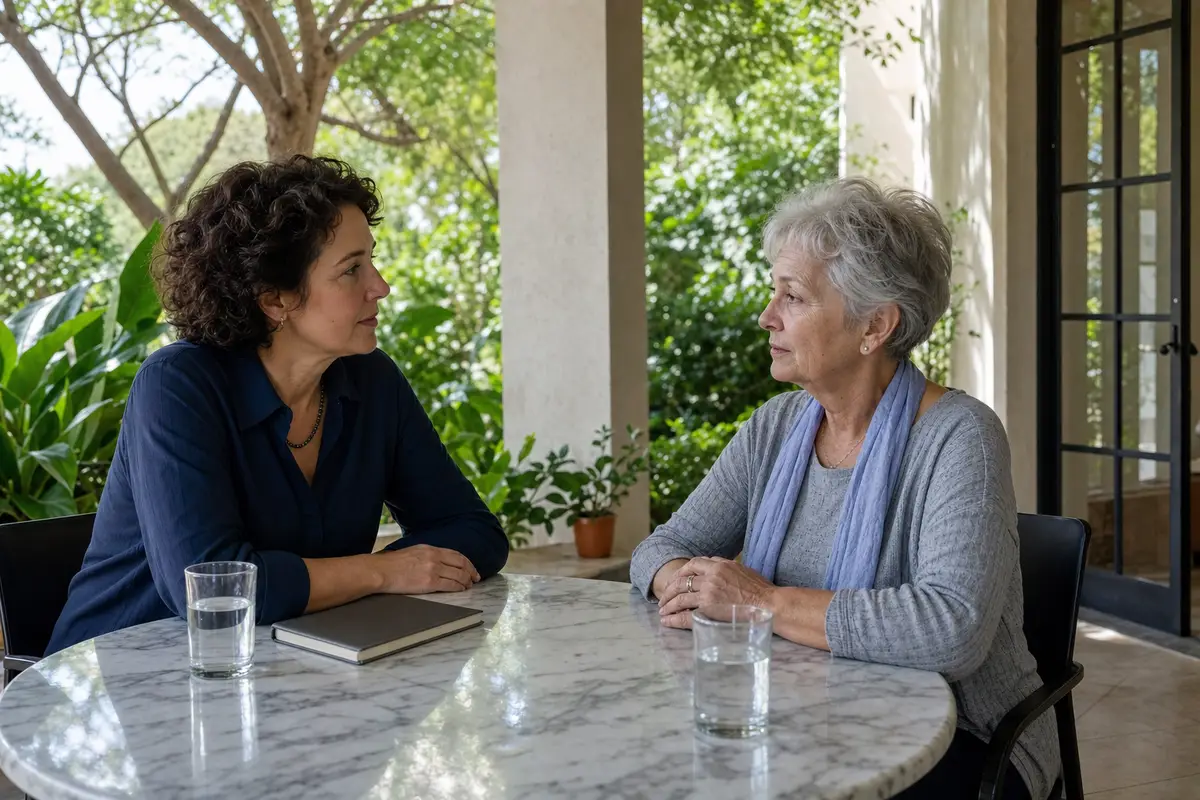
Talk therapy is a first-line, evidence-based treatment for depression in older adults, and it works whether delivered in person or by video. Cognitive behavioral therapy helps a person identify unhelpful thought patterns, such as ‘I’m a burden to everyone,’ and replace them with more accurate, workable ones. Behavioral activation, a related approach, focuses on rebuilding small daily routines and sources of enjoyment that depression has eroded.
For some older adults, medication management alongside therapy is appropriate, coordinated with a primary care physician or psychiatric provider. A mental health clinician does not prescribe medication changes independently; that decision sits with the prescribing physician, in partnership with the therapy team. This coordination matters because many older adults already take medications for other conditions, and any mood-related medication has to be weighed against what else is in the regimen.
Understanding how therapy actually helps in the treatment of depression matters because expectations shape whether someone sticks with it. Therapy is not a single conversation that resolves everything. It’s a structured process, usually weekly sessions over a period of months, aimed at specific, measurable change.
What does a typical course of treatment involve?
A course of therapy for depression in older adults starts with an assessment of symptoms, history, and current stressors. From there, a clinician and patient set concrete goals: reconnecting with one social activity per week, for example, or reducing specific negative thought patterns. Progress is reviewed regularly, and the approach adjusts based on what’s working.
For older adults managing multiple health conditions, outpatient therapy for depression is often the right level of care: regular sessions without hospitalization, fitting around medical appointments and daily routines rather than disrupting them. Most people see measurable movement in symptoms within the first eight to twelve sessions, though timelines vary by individual circumstances.
Does Medicare cover treatment for depression in older adults?
Medicare Part B covers outpatient mental health services, including individual therapy, for people who meet medical necessity criteria. Coverage typically includes a portion of the session cost after the deductible, with the patient responsible for coinsurance unless they have supplemental coverage. For a full breakdown of what’s included, Medicare coverage for depression counseling is worth reviewing before starting care, so there are no surprises about cost.
What should families do if they notice these signs?
Start with a direct, gentle conversation. Naming specific observations, ‘You haven’t called in two weeks, and you mentioned you’re not sleeping well,’ works better than a vague ‘Are you okay?’ Older adults open up when the conversation is specific rather than general. Specificity signals that someone has actually noticed the pattern, not just asked a routine question.
Next, involve a primary care physician, who can rule out medical causes and make a referral if needed. Depression in older adults is frequently treatable once it’s correctly identified, and most people see meaningful improvement with consistent care. The identification step is usually the hardest part; treatment itself follows a well-established path once a clinician is involved.
If mobility, transportation, or scheduling has been the real obstacle to getting help, that barrier no longer has to stand in the way. Explore the Depression category for more on recognizing and addressing depression across different life stages.
If you or someone you know is in immediate danger, call or text 988 (Suicide & Crisis Lifeline).
Getting support that comes to you
A diagnosis of depression in older adults is not a verdict on someone’s character or a permanent state. It’s a medical condition with a clear, well-studied path toward improvement. The harder part is often logistics: getting to appointments, navigating referrals, coordinating with existing medical care.
Better You Therapy is a Florida-licensed mental health practice providing teletherapy statewide and on-site clinical services in assisted living, skilled nursing, and CCRC communities across Palm Beach, Martin, St. Lucie, and Okeechobee counties. Licensed clinicians come to the patient, on-site in senior living communities or by video anywhere in Florida, and handle referral, consent, and billing with Medicare and private insurance directly. The patient and family navigate none of it.