Key Takeaways — performance anxiety athletes
- Performance anxiety athletes experience is a normal stress response, not a character flaw or lack of mental toughness.
- It becomes a problem when the fear of failing interferes with training, competing, or enjoying the sport at all.
- Physical symptoms (racing heart, shaky hands, nausea) and mental symptoms (racing thoughts, catastrophizing, tunnel vision) show up together.
- Breathing techniques, cognitive reframing, and structured exposure to pressure situations are the core tools that help.
- A sports psychologist or licensed therapist can teach these skills in a way that fits an athlete’s specific sport and schedule.
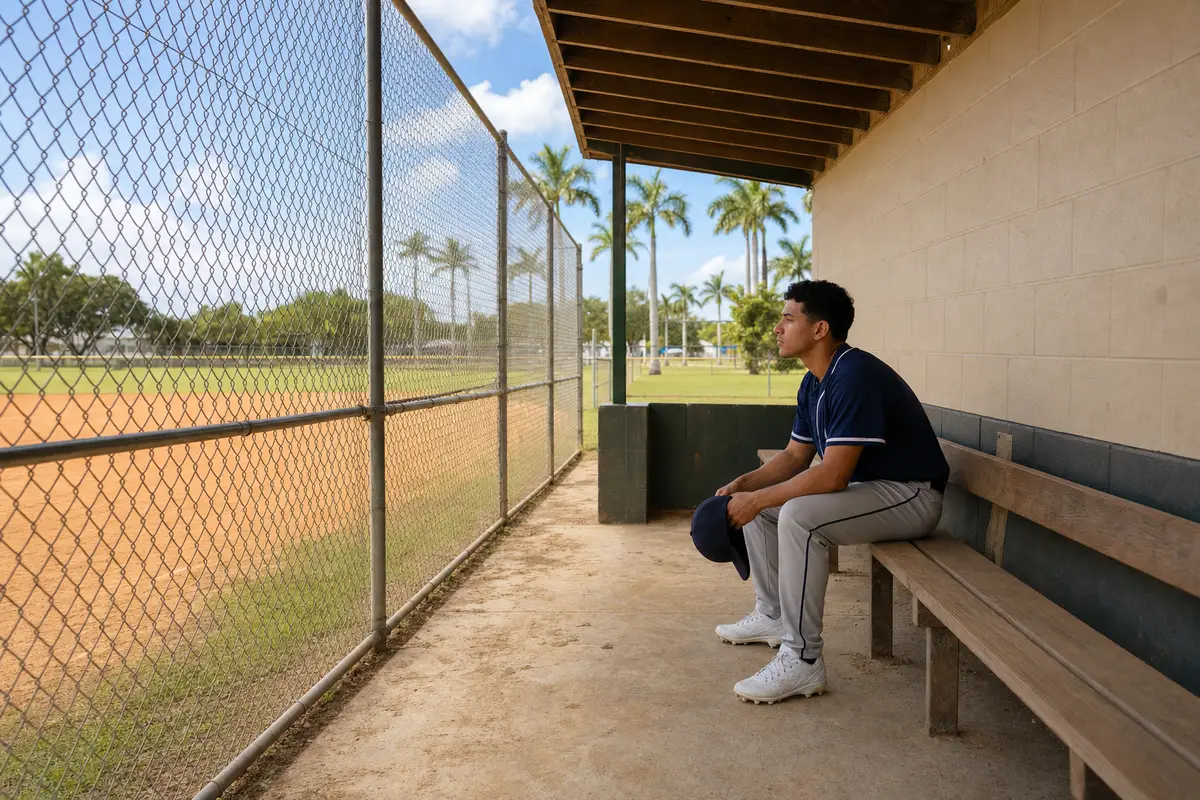
When your hands shake before a free throw you’ve made a thousand times in practice, or your stomach drops in the tunnel before a race you’ve trained a year for, something is happening that has nothing to do with skill. Performance anxiety athletes describe this feeling the same way across sports: a body that suddenly won’t cooperate, a mind that won’t stop predicting disaster. It’s one of the most common and least talked-about experiences in competitive sport, and it has nothing to do with being mentally weak.
This isn’t about being unprepared. Many of the athletes who struggle most with performance anxiety are the ones who have trained the hardest and care the most about the outcome. The anxiety is a byproduct of caring, not a sign that someone doesn’t belong on the field or court.
What performance anxiety actually looks like
Performance anxiety athletes face shows up in two layers: physical and mental. Physically, it includes a pounding heart, tight chest, sweaty palms, shaky limbs, or a stomach that won’t settle. These are the same symptoms as the body’s general stress response, triggered because the brain has flagged the upcoming competition as a threat.
Mentally, it sounds like a loop of “what if I mess up,” “everyone is watching,” or “I can’t afford to fail this time.” Some athletes describe tunnel vision, where their focus narrows so tightly on the fear of failure that they lose track of the actual task in front of them. Others go blank, unable to recall plays or technique they know cold in practice.
The key difference between helpful nerves and performance anxiety is function. A manageable level of nervous energy sharpens focus and reaction time. Performance anxiety crosses a line when it starts shrinking an athlete’s ability to perform, train consistently, or even want to show up.
This distinction matters because the two states feel similar at first. A racing heart before a start gun and a racing heart during a panic spiral produce the same physical sensation. What separates them is whether the athlete can still access their training, or whether the fear has taken over the controls.
Why it happens even to experienced athletes
Performance anxiety isn’t limited to rookies or young athletes new to pressure. Veteran competitors, Olympic-level athletes, and professionals with years of high-stakes experience report it too. The nervous system doesn’t distinguish between “this is my first big meet” and “this is my tenth” if the stakes feel equally high each time.
Consider an athlete who has competed for a decade without issue, then suddenly develops anxiety after a bad fall or a public mistake. The body remembers that moment and braces for it to happen again, even in situations that are objectively safe. This is a normal protective response, not a sign that something is permanently wrong.
Experience also raises the stakes in ways that compound the pressure. A veteran athlete has more to lose: a reputation, a ranking, a scholarship, a shot at a title that won’t come around again. The anxiety tracks the stakes, not the skill level.
How performance anxiety is treated
Treatment for performance anxiety combines physical regulation techniques with mental skills training. Neither works as well alone. An athlete who learns to slow their breathing but still believes a single mistake will ruin everything hasn’t addressed the root problem.
Breathing and body-based techniques
Slow, controlled breathing activates the body’s parasympathetic nervous system, which counteracts the fight-or-flight response driving the racing heart and shaky hands. A common technique involves inhaling for four counts, holding for four, and exhaling for six to eight counts, repeated for one to two minutes before a competition or during a break in play.
Progressive muscle relaxation, where an athlete tenses and releases muscle groups in sequence, reduces physical tension that builds up before performing. These techniques work best when practiced regularly in low-stakes situations, not tried for the first time minutes before a competition.
Athletes who rehearse these techniques daily during training report they become automatic under pressure, the same way a free-throw routine becomes automatic after enough repetition.
Cognitive reframing
The second piece is learning to catch and redirect the thoughts that fuel the anxiety. Instead of trying to eliminate nervous thoughts entirely, athletes learn to notice them without letting them take over. A thought like “I’m going to blow this” gets replaced with something more accurate and useful, like “I’ve prepared for this and I can handle one mistake.”
This kind of cognitive work is a core focus of mental training for athletes, which teaches athletes to treat their mental approach to competition with the same structure and repetition they apply to physical skills.
Exposure and simulation
Gradually practicing under pressure-like conditions desensitizes the nervous system to competition stress. This means practicing free throws with teammates watching and counting misses out loud, or running race-pace intervals in front of a coach with a stopwatch calling out splits. The goal is to make the practice environment emotionally closer to competition, so the body isn’t encountering that level of pressure for the first time on game day.
Over repeated exposure, the body’s threat response to pressure situations drops. The competition stops registering as an emergency and starts registering as a familiar, manageable event.
When performance anxiety needs professional support
Some athletes manage performance anxiety with self-taught breathing and reframing techniques. Others need structured, ongoing support, especially if the anxiety has started affecting sleep, appetite, relationships with teammates, or willingness to compete at all.
A licensed clinician trained in sport performance, called a sports psychologist, identifies the specific thought patterns and physical triggers driving an individual athlete’s anxiety. What is a sports psychologist and what does a sports psychologist do both cover this role in more depth, including how it differs from general talk therapy.
Performance anxiety is sometimes an early sign of broader burnout, especially in athletes who have been competing at a high level for years without a break. If dread about competing is paired with exhaustion, loss of motivation, or irritability outside of sport, athlete burnout signs, causes, and recovery is worth reading alongside this article.
Why this matters beyond the scoreboard
Untreated performance anxiety doesn’t stay contained to competition day. Athletes who dread performing start avoiding practice, pulling back from teammates, or quietly considering quitting a sport they once loved. The cost isn’t just a missed shot or a slow split, it’s the erosion of something that used to bring them joy.
Addressing performance anxiety early, with real tools rather than willpower alone, protects both performance and mental health long-term. Why sports psychology is important goes further into how this kind of support affects athletes across their entire career, not just a single season.
Getting support for performance anxiety
If competition day fear has started to feel bigger than the sport itself, working with a clinician who understands athletic pressure builds a toolkit that holds up under stress. Better You Therapy is a Florida-licensed mental health practice providing teletherapy statewide, with clinicians who work with athletes on performance anxiety, burnout, and the mental side of competing. Explore more in the sports psychology section of our blog, or reach out to find a clinician who fits your sport and schedule.
For related reading, see our guide on Athlete Mental Health: What It Means and Why It Matters.
For related reading, see our guide on What's a Sports Psychologist? A Plain-Language Guide for Athletes.