Key Takeaways
- Premarital counseling typically covers communication patterns, financial habits, family expectations, intimacy, and conflict resolution across a structured series of sessions.
- Most couples complete the process in four to eight sessions over one to three months, though timelines vary by therapist and couple.
- The first session usually includes an assessment or guided interview that maps out where a couple already agrees and where they haven’t talked in detail.
- A therapist leads the structure of each session; there is no grade, no test, and no way to fail.
- Teletherapy makes premarital counseling accessible from home, which matters for couples juggling wedding planning, work, and travel.
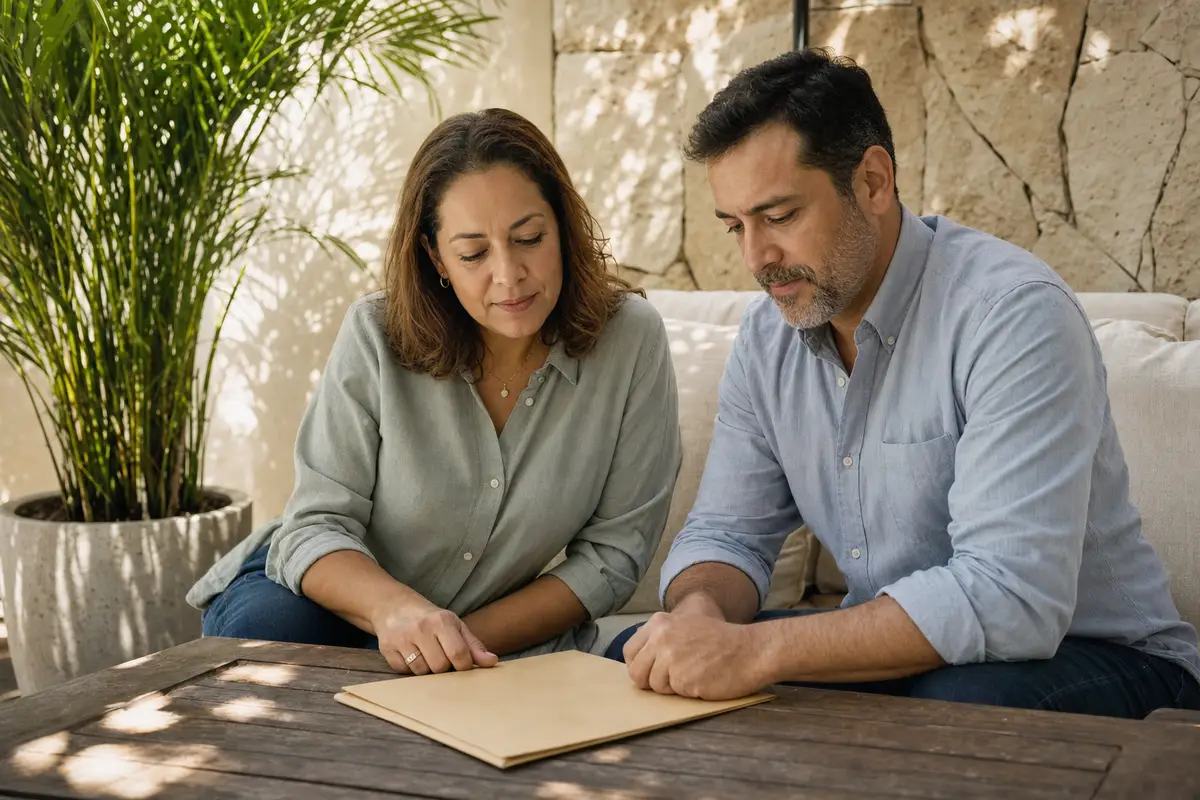
You’ve said yes to the marriage. Now you’re wondering what actually happens once you’re sitting across from a therapist instead of planning seating charts. Many couples ask what does premarital counseling entail before they ever sit down for a first session, because the not-knowing feels like one more unscheduled item on a list that already has too many things on it. Some picture a lecture. Others picture a test with a pass-or-fail outcome that decides whether the wedding should happen at all. Neither picture matches what actually takes place in the room.
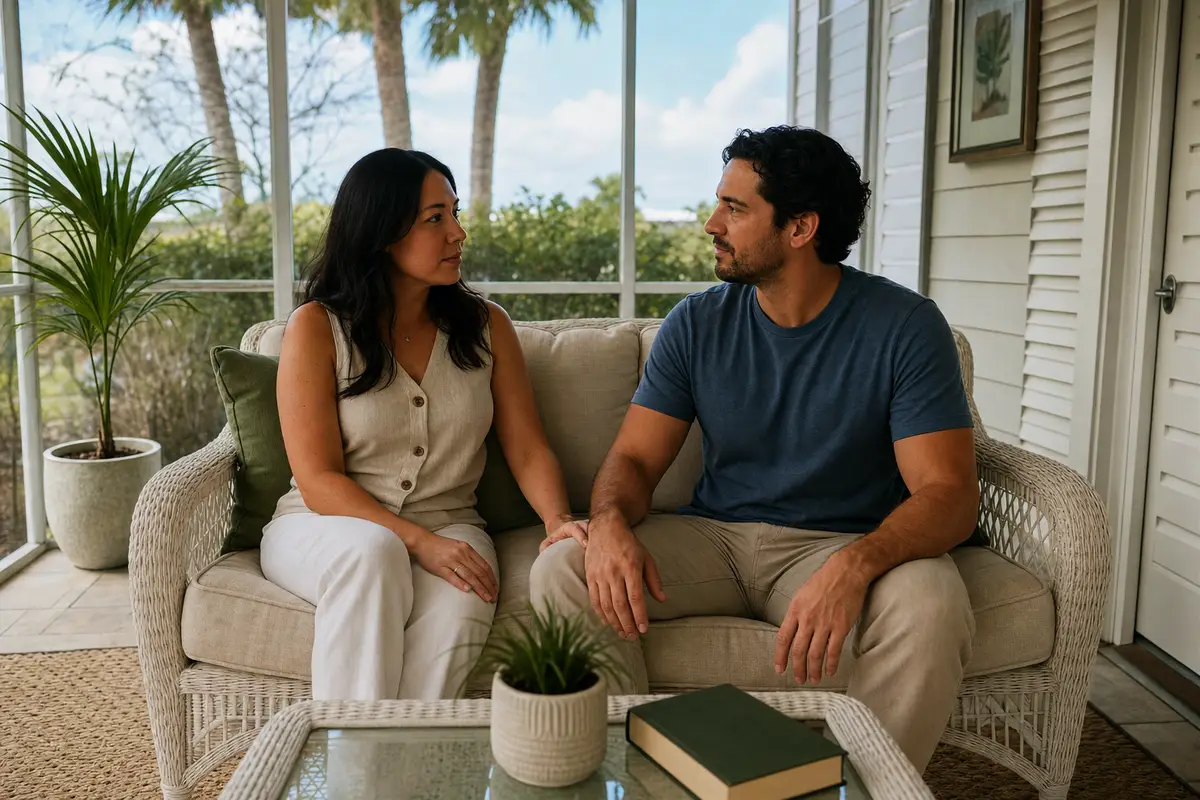
The short version: premarital counseling is a structured series of conversations with a couples-focused therapist, built around specific topics rather than free-form talk. There’s no grade at the end. You and your partner do the talking, and the therapist keeps the conversation on track so you build a shared understanding of money, family, conflict, and intimacy before those topics come up for the first time under real stress. Knowing the shape of the process ahead of time turns an unknown into a plan with a start date and an end date. For a broader overview of the process and who it’s designed for, see what premarital counseling is and who it’s for.
What does premarital counseling entail, session by session?
Premarital counseling generally moves through three phases: an initial assessment, four to six sessions on core relationship topics, and a closing session that sets goals for the first years of marriage. Each session runs 45 to 60 minutes, usually held weekly or every other week so a couple has time between sessions to keep talking about what came up. A therapist leads the structure; the couple supplies the content. Nothing about the timing is fixed in stone. A couple planning a wedding six weeks out compresses sessions closer together, while a couple with a year to plan spreads them out and revisits topics as new questions come up during the engagement.
The first session: where you stand now
The opening session usually includes a questionnaire or a guided interview covering communication habits, financial background, family history, and expectations around roles and children. Some practices use a formal, validated assessment tool that scores agreement and disagreement across dozens of categories. Others rely on a structured conversation led by the therapist, without a scored instrument. Either approach gives the therapist a map of where a couple already agrees and where they haven’t talked in detail, which shapes how the middle sessions get built.
This session also sets expectations for the couple. The therapist explains how sessions are run, what topics are ahead, and what homework, if any, happens between visits. Some couples leave the first session surprised by how much they already agree on. Others leave it having discovered a topic, like whether to combine finances, that they assumed was settled but never actually discussed out loud. Either outcome is normal, and neither one is a test a couple can fail.
The middle sessions: the topics that come up most
The bulk of premarital counseling happens in the middle sessions, each built around one topic area:
- Communication patterns, including how each partner handles disagreement and requests for change.
- Financial habits, from spending style and debt to who manages the household budget.
- Family and in-laws, including boundaries and holiday expectations.
- Intimacy and physical connection, including how affection and closeness change over time.
- Conflict resolution, a repeatable way to disagree without letting it turn into a lasting wound.
- Roles and future planning, covering careers, household division of labor, and whether or when to have children.
A couple doesn’t need to agree on every point in these sessions. Some sessions end with a concrete decision, like a shared budgeting method. Others end with an agreement to keep talking about a topic that isn’t fully resolved, which is itself a useful outcome. The goal is naming the topic out loud before the wedding, not after the first real argument about it. A therapist keeps each session on one topic rather than letting it drift, so a conversation about finances doesn’t quietly turn into an unrelated argument about in-laws.
The final session: setting goals
The closing session works differently than the ones before it. Instead of covering new territory, it asks what the couple learned and what they want to carry into marriage. Many therapists send couples home with a short written summary of decisions made and topics worth revisiting in the first year. Some couples use this session to set a specific check-in, like a conversation about finances scheduled for their first anniversary, so an agreement made in counseling doesn’t quietly fade once the wedding is behind them.
What premarital counseling doesn’t cover
Premarital counseling is preventive, not a response to an existing crisis. It’s built around topics that haven’t yet caused damage, with the goal of naming them before they do. If infidelity has already happened, that calls for a different kind of work built around trust repair rather than future planning; couples in that situation are better served by infidelity counseling than by the format described above, since the starting point is repair rather than preparation.
The same distinction applies at the other end of a marriage. If a relationship is ending rather than beginning, divorce counseling covers different ground: the practical and emotional work of ending things well, not preparing to start them. A couple already in crisis benefits more from a therapist trained in that specific kind of repair than from a program designed for people who haven’t yet lived through the problem it’s meant to prevent.
How this plays out for one couple
Consider a couple where one partner grew up in a house that never discussed money and the other grew up in a family that tracked every dollar out loud at the dinner table. Neither habit is wrong on its own, but the mismatch causes friction the first time a joint bill arrives and one partner wants to talk it through in detail while the other wants to avoid the conversation entirely. Left unnamed, that pattern repeats every month without either partner understanding why the other reacts the way they do.
In a middle session focused on finances, the therapist asks each partner to describe how money was handled growing up, then helps them build one shared system before the wedding instead of after the first argument about it. The point isn’t to pick whose family had it right. It’s to give both partners a shared method going forward, built with a third person in the room instead of worked out in the middle of a disagreement over a bill.
What this means for you and your partner
Walking in already knowing what does premarital counseling entail removes the guesswork from the first session. You show up ready to talk about the topics that matter instead of wondering if you’ll be quizzed or judged. The format stays the same whether a couple has been together two years or ten: structured conversation, a trained guide, and a set number of sessions with a clear end point.
How many sessions a couple needs and how long the process takes depends on the relationship and the therapist’s approach. Our guide on how long premarital counseling takes breaks down typical timelines in more detail, including what makes a process run shorter or longer for a given couple.
Cost varies by format and location too. If budget is part of the planning, see how much premarital counseling costs and how much premarital counseling is per session, both of which cover typical rates and what affects them. This article is also part of our broader premarital counseling collection, which covers cost, timeline, and readiness questions in more depth.
Frequently asked questions
Should couples get premarital counseling if the relationship feels fine?
Yes. Premarital counseling isn’t reserved for couples with visible problems. It gives couples who feel solid a structured way to test that solidness against real topics like money and family before the wedding, not after. A relationship that feels fine on the surface can still hold an unspoken assumption about children, finances, or where to live that surfaces for the first time months into a marriage. Our article on whether couples should get premarital counseling looks at the case for starting even when nothing feels wrong.
Is premarital counseling only for couples marrying in a church?
No. Premarital counseling is a clinical process, not a religious requirement, though many couples first encounter it through a church or officiant that requires it before performing a ceremony. A licensed therapist runs the same structured process regardless of whether the wedding is religious or civil, and the topics covered, communication, money, family, and intimacy, stay the same either way.
What happens if premarital counseling reveals a serious disagreement?
A serious disagreement surfacing before the wedding is exactly what the process is designed to catch. The therapist helps the couple work through it directly, in a session built for that purpose, rather than letting it surface for the first time during the marriage. Some disagreements resolve within the remaining sessions. Others turn into an ongoing conversation the couple continues after the wedding, with the counseling process having at least made sure both partners know it exists.
Getting started
Better You Therapy is a Florida-licensed mental health practice providing teletherapy statewide, including premarital counseling built around the structure described above: an assessment, focused sessions on the topics that matter most, and a closing session that sets goals for the marriage ahead. Sessions happen by video, which means a couple juggling wedding planning, work schedules, and travel doesn’t need to add a commute to an already full calendar. No referral or diagnosis is required to start. What’s required is a date on the calendar and a partner willing to sit down for an hour.